Our Tour Guide
Lahore Tour
-
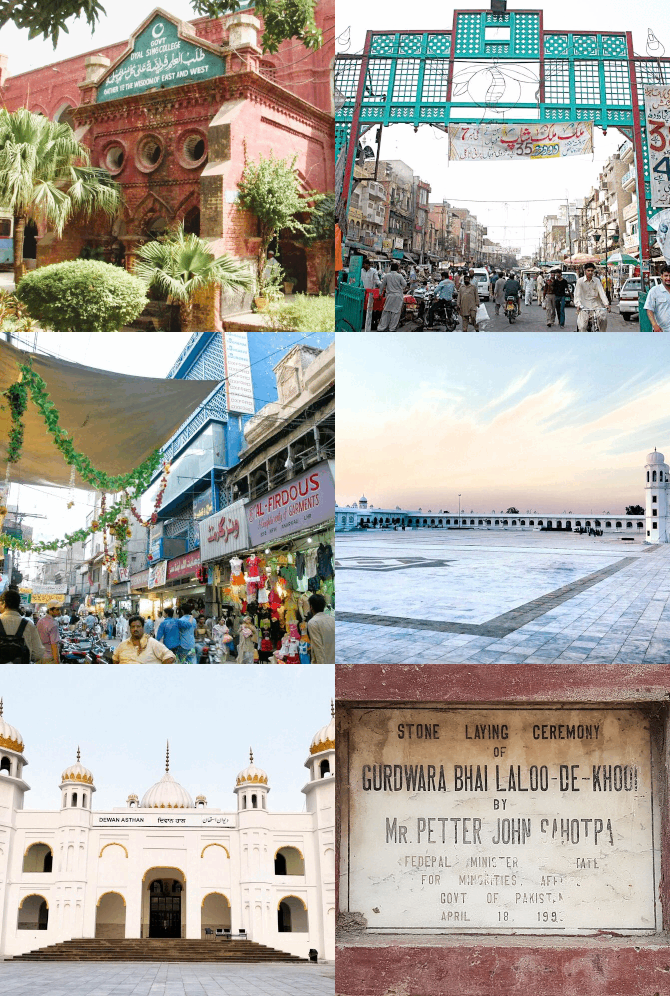
Visit Dayal Singh College, Dayal Singh Trust Library
Explore Anarkali Bazaar
Enjoy dinner at Lakshmi Chowk
Darshan yatra to shrines: Gurdwara Bebe Nanaki, Darbar Hazrat Mian Mir, Gurdwara Dera Sahib, and Samadhi of Maharaja Ranjit Singh
Dinner at Haveli Restaurant
Excursion to Kartarpur
Full-day visit to Gurdwara Darbar Sahib Kartarpur, a symbol of peace and spirituality
Return to Lahore for dinner and rest
Visit to Nankana Sahib Ji
Pilgrimage to the birthplace of Guru Nanak Dev Ji
Explore seven sacred Gurdwaras including Janam Asthaan, Kiara Sahib, Maal Jee, Panjvin Patshahi, Chhevin Patshahi, Bal Lila, Patti Sahib, and Tambu Sahib
Dinner and overnight stay
Gurdwara Panja Sahib, Hassan Abdal
Morning visit to Gurdwara Panja Sahib in Hassan Abdal
Return to Islamabad for dinner at Basti Restaurant
KartarPur
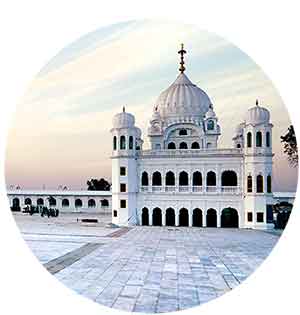
Kartarpur is a town 102 km from Lahore in the Shakargarh Tehsil, Narowal District inPunjab, Pakistan. Located on the right bank of the Ravi River, it is said to have been founded by Guru Nanak, the first guru of Sikhism, who established the first Sikh commune there.
The first guru of Sikhism, Baba Guru Nanak, founded Kartarpur in 1504 AD on the right bank of the Ravi River with money donated by Karori, a wealthy Khatri convert. It was the site of the first Sikh commune. Guru Nanak settled there with his family following his death in 1539.
The gurdwara was built to commemorate the site where Guru Nanak, the founder of Sikhism, settled after his missionary work and did farming. Guru Nanak founded the Kartarpur town by Ravi River in 1504, plowing the fields and setting up a community kitchen, or Langar. He assembled a Sikh commune there, and lived for 18 years until his death on 22 September 1539. The gurdwara is built where Guru Nanak is said to have died. It is therefore the second holiest site of the Sikh religion after Gurdwara Janam Asthan – the birthplace of Guru Nanak located in Nankana Sahib, Pakistan.
Nankana Sahib Gurdwara
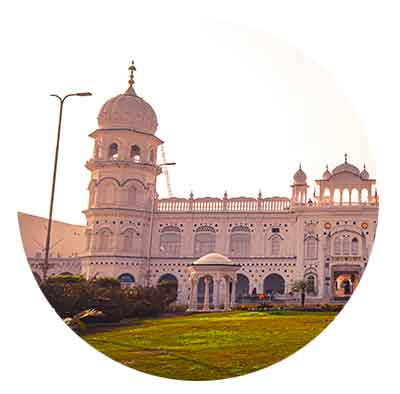
Nankana Sahib is a city and capital of Nankana Sahib District in the Punjab province of Pakistan. It is named after the first Guru of the Sikhs, Guru Nanak, who was born in the city and first began preaching here. Nankana Sahib is among the most important religious sites for the Sikh religion.It is located about 91 km (57 mi) west of Lahore and about 75 km (47 mi) east of Faisalabad.
Gurdwara Janam Asthan is believed to be located at the site where Guru Nanak was born to Mehta Kalu and Mata Tripta. The township was founded by Rai Bhoi and thus known as Rai-Bhoi-Di-Talwandi. His great grandson Rai Bular Bhatti, renamed it as 'Nankana Sahib' after the birth of Guru Nanak. The Gurdwara Nankana Sahib, originally constructed by Sikhs during the Mughal era in around 1600 CE was renovated in 1819–20 CE by Gian-Punjab Maharaja Ranjit Singh.
During the Akali movement, on 20 February 1921, Narain Das, the Udasi mahant (clergy) of the gurdwara at Nankana Sahib, ordered his men to fire on Akali protesters, leading to the Nankana massacre. The firing was widely condemned, and an agitation was launched until the control of this historic Janam Asthan Gurdwara was restored to the Sikhs. Again in the 1930s and 1940s the Sikhs added more buildings and more architectural design.
GURDWARA RORI SAHIB
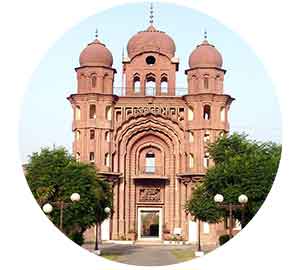
Gurdwara Rori Sahib (official name Gurdwara Rori Sahib Patshahi Pehla) was a historic Sikh gurdwara located half a kilometre east of Jahman village in Lahore District, Punjab, Pakistan. The edifice marked a spot on a mound where Guru Nanak and Bhai Mardana sat and sung songs together.
Jhaman village was a stopping place for Guru Nanak, who journeyed to his ancestral maternal village of Chahal (near Jahman) to visit his maternal grandparents, travelling with his companion Bhai Mardana. The Gurdwara was built on a spot near the bank of a big pond that Nanak and Mardana are believed to taken rest at and sung spiritual hymns whilst seated atop of the mound.
It is believed Guru Nanak visited the site three times during his life. Guru Nanak is said to have found some pottery shards from ruins located on the mound. Afterwards, Guru Nanak disembarked from Jahman for Sultanpur Lodhi. On one of these visits, it is believed that Nanak used wood from a tree at Jahman village to use for the construction of a sarangi instrument for Bhai Mardana.
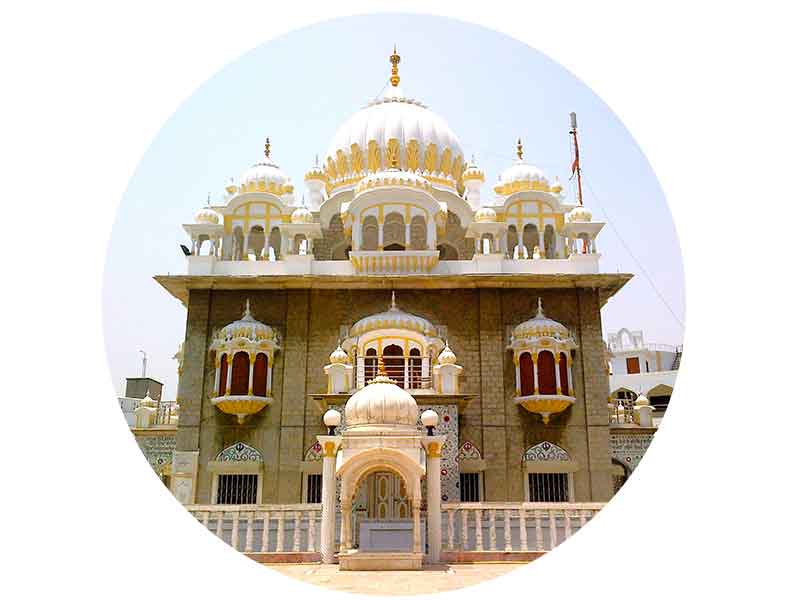
GURDWARA PANJA SAHIB
Gurdwara Panja Sahib is a famous gurdwara located in Hasan Abdal, Pakistan. The shrine is considered to be particularly important as the handprint of the founder of Sikhism, Guru Nanak, is believed to be imprinted on a boulder at the gurdwara.
Guru Nanak along with Bhai Mardana reached Hasan Abdal in Baisakh Samwat 1578 B.K., corresponding to the summer of 1521 CE, when according to Sikh legend, Guru Nanak's handprint was imprinted onto a boulder. The Gurdwara was named Panja Sahib by Hari Singh Nalwa, the most famous general of the Sikh Empire. He is credited with having built the first gurdwara at the site Under a shady cool tree, Guru Nanak and Bhai Mardana started reciting Kirtan and their devotees gathered around. This annoyed a local saint, Shah Wali Qandhari.
The fountain of Shah Wali Qandhari dried up. On witnessing this, the Wali in his rage threw a part of a mountain towards the Guru from the top of the hill. The Guru stopped the hurled rock. Clear, fresh spring water gushes out from somewhere behind the rock and spills over into a very large pool. An imprint of a right hand was carved on the rock while it was built in the Mughal style by Maharaja Ranjit Singh (1780-1839).